High cortisol is blocking your testosterone
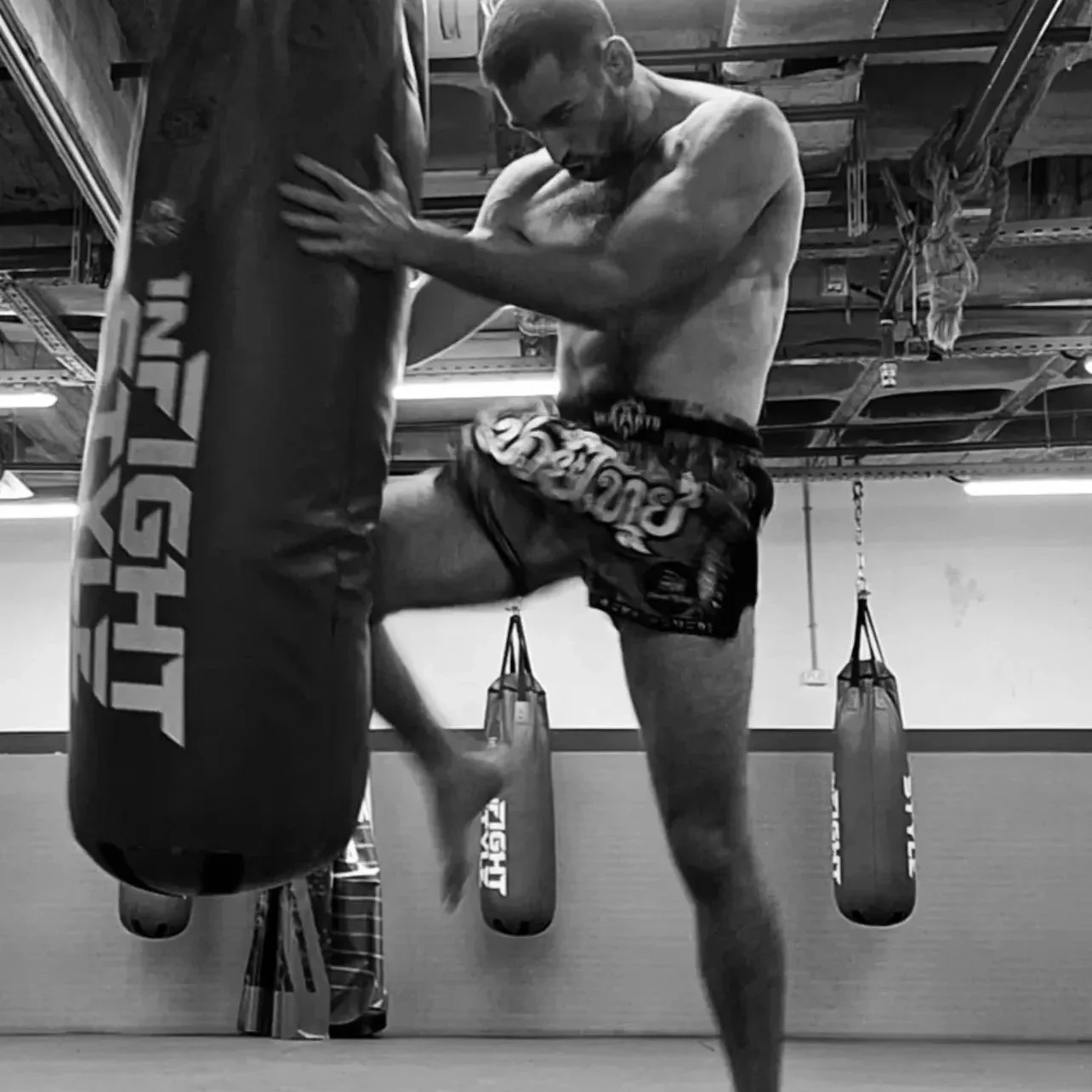
Cortisol is the bouncer at the door to testosterone
And he doesn’t care how “dialed” your training is.
Let’s start with the thing none of you want to hear:
Most fighters who think they have “low testosterone” aren’t suffering from a testosterone problem. They’re suffering from a stress problem, and stress has a name in your body: cortisol.
Now, cortisol isn’t evil. Cortisol is useful. Cortisol is why you can train hard, spar hard, cut weight, and still walk to the shower after.
But when cortisol stays high for weeks - because training is high, sleep is low, food is inconsistent, life is chaotic, and caffeine is being used like an emotional support animal - your body makes a very logical decision.
It stops prioritizing growth.
Because growth is optional, survival isn’t.
And testosterone, for all the hype around it, is fundamentally a “good times” hormone. It thrives when the body feels safe enough to invest in building tissue, recovering, and reproducing. If the nervous system thinks you’re being chased by a tiger (or just your schedule), testosterone is the first thing to get shoved to the back of the line.
The seesaw nobody programs for
Here’s the relationship in plain English: cortisol and testosterone live on a seesaw. Acute spikes are normal. Chronic elevation is the issue.
Fighters get stuck because they collect stress like Pokémon (especially in Thailand)
Hard training, hard rounds, weight cut, poor sleep, work stress, relationship stress, travel, dehydration, low carbs, high caffeine, then they wonder why they feel “wired but dead,” why their body composition stalls, and why recovery feels like a joke.
It’s not that you need to “want it more.”
It’s that your physiology has a threshold, and you keep stepping on it with muddy boots.
What cortisol actually does to testosterone (the not sexy mechanisms)
If this was just “stress makes you feel tired,” we could all move on. But there are direct endocrine mechanisms here, and they matter.
Stress hormones interact with the reproductive system through the HPG axis (hypothalamus–pituitary–gonadal axis). In normal conditions, the brain signals down the chain - GnRH leads to LH and FSH, which signal the testes to produce testosterone. Under chronic stress, that signaling gets suppressed. The system is basically told: “Not now.”
Then there’s the practical outcome fighters actually feel: even when total testosterone isn’t “crashed” on paper, free testosterone can be low. Cortisol is associated with changes that can increase binding proteins and reduce what’s biologically available. Translation: your labs might look fine, while you feel like a low battery version of yourself.
And here’s the kicker: if your sleep is compromised, testosterone output drops fast. In one well known controlled study, one week of sleeping less then 5 hours per night reduced daytime testosterone by about 10-15% in healthy young men. That’s not a “maybe.” That’s measurable.
So when fighters tell me they’re sleeping 5-6 hours, training twice a day, and “just need a better supplement stack,” I’m not judging. I’m just not pretending the stack is the issue.
The signs you’re running on cortisol (and calling it discipline)
Most people don’t notice chronic cortisol until it’s been there long enough to feel normal.
You wake up tired, but you’re oddly alert. You push through the day, but it’s like you’re being driven by anxiety and caffeine rather than actual energy. Training feels good during the session, then you crash later. You start craving sugar, coffee, stimulation - anything that gives your brain a dopamine handshake.
You get leaner in your face, but softer around your midsection. You’re “training hard” but not building like you used to. Mood is shorter. Patience is thinner. Libido is quieter.
None of this is a moral failure. It’s a system that’s overstimulated and under recovered.
The fighter problem: training stress isn’t the only stress
Here’s the trap fighters fall into: you program training like it exists in a vacuum.
But your endocrine system doesn’t separate “hard sparring” from “hard life.” Stress is stress.
A brutal training week on a calm life can be fine. That same training week stacked on bad sleep, low food, and high mental load becomes a cortisol snowball.
So the answer isn’t “train less.” It’s “stop pretending recovery is optional.”
Six fixes that actually work (and don’t require becoming a monk)
Let’s make this actionable, but not in a corny “10 tips for better hormones” way.
These are the levers that consistently move cortisol down and allow testosterone to normalize—especially for fighters and athletes.
1) Stop fasting if you’re already lean and training hard
Fasting can be useful in certain contexts. But for a fighter who’s already lean-ish, training a lot, and living on coffee, fasting often just adds another stressor to a nervous system that’s already redlining.
You wake up, you don’t eat, you smash caffeine, cortisol spikes, blood sugar fluctuates, and you start your day already in fight-or-flight. Then you wonder why you feel anxious, why your energy is unstable, and why your recovery sucks.
A simple breakfast - protein plus some carbs - sends a “safe” signal to the system. It’s not glamorous, but it works.
2) Caffeine is a tool. Don’t turn it into a lifestyle.
Caffeine can increase cortisol, especially when used aggressively or timed poorly. In controlled research, caffeine doses can create noticeable cortisol increases across the day.
I’m not telling you to quit coffee. I’m telling you to stop using it to cover up sleep debt and under-fueling.
If you need three coffees to feel human, that’s data. Not personality.
The simplest upgrade: keep caffeine earlier, reduce total dose, and don’t combine “fasted + stressed + stimulant” like it’s a performance strategy.
3) Put carbs where they belong: around training
Training is a stressor. Carbohydrate availability changes the cortisol response to that stress.
There’s good evidence that carbohydrate ingestion during exercise can attenuate cortisol rises in many study setups.
Practical translation: if you train hard and never refuel properly - especially if you do multiple sessions - your stress response stays elevated longer.
For fighters, carbs aren’t the enemy. Poor timing is the enemy.
Carbs around training help you come down from the session instead of staying amped for the next six hours.
4) Sleep isn’t “recovery.” Sleep is the factory.
If you only change one thing, change this.
That 10-15% testosterone drop from a single week of short sleep wasn’t in exhausted athletes - it was in healthy young men.
Now imagine what happens to fighters stacking camps, stress, and weight cuts on top of it.
Sleep is where you rebuild tissue, regulate appetite, normalize cortisol rhythm, and support testosterone output.
If you’re serious: morning light, consistent bedtime, dark cool room, screens off earlier than you want. Not because it’s aesthetic. Because it’s freaking endocrine logic.
5) Stop training like a natural athlete has infinite recovery
This is where ego sneaks in.
If you’re lifting heavy, doing conditioning, and also sparring / rolling multiple times a week, you can’t treat every day like it’s a highlight reel. You need true low intensity days. You need deloads. You need periods where intensity is high but volume is sensible (and vice versa).
Rest days aren’t “days off.” They’re where stress hormones dissipate so adaptation can actually show up.
6) Your life stress counts. Yes, even if you “handle it.”
You might be mentally tough. Cool.
Your hypothalamus doesn’t care.
Work pressure, financial stress, relationship conflict, constant stimulation, doom scrolling at 1am - your nervous system counts it all.
If your life is high stress, you can’t program training like you live on a mountain with eight hours of sleep and zero emails.
You don’t need a perfect life. You need an honest one, and a plan that respects reality.
The takeaway you actually need
If you feel empty (physically, but possibly mentally too), under recovered, stubbornly soft, and dependent on stimulants, don’t start by blaming testosterone.
Start by asking a more useful question:
“Is my body living in a state where it feels safe enough to build?”
If the answer is no, cortisol is the bottleneck.
Lower cortisol, and testosterone often rises as a downstream effect, because the system finally has permission to shift from survival to performance again.
Don't just fight - Fight by desigN
For the curious bunch (References):
Sleep and testosterone
Leproult & Van Cauter showed that just one week of short sleep (around five hours per night) dropped daytime testosterone by roughly 10-15% in healthy young men. Not exhausted athletes. Not weight cutters. Healthy guys.
Published in JAMA, 2011. This one alone should change how seriously fighters take sleep.
Stress, cortisol, and reproductive hormones
Recent reviews in Neuroscience & Biobehavioral Reviews outline how chronic stress suppresses the HPG axis, reducing GnRH, LH, and testosterone signaling upstream. In simple terms: when stress stays high, the brain stops telling the body to build. Survival wins, growth waits.
Training as a stressor
Andrew Hackney’s work in the Journal of Endocrinological Investigation laid much of the groundwork for how exercise stress affects the neuroendocrine system. Training isn’t “good” or “bad.” It’s stress. Adaptation only happens if that stress is resolved.
Carbohydrates and cortisol
Research by Nieman and colleagues (Journal of Applied Physiology) showed that carbohydrate intake during and after prolonged or intense training attenuates cortisol response. This isn’t bro science. Fuel changes the hormonal cost of training.
The NSCA’s Essentials of Strength Training and Conditioning echoes this in practical terms: carbs support recovery by blunting excessive stress responses.
Caffeine and cortisol
Lovallo et al. (Psychosomatic Medicine) demonstrated that caffeine elevates cortisol across the day, particularly with habitual use. Coffee isn’t evil, but using it to mask sleep debt and under fueling has predictable hormonal consequences.
Overtraining and hormonal suppression
The European College of Sport Science consensus paper by Meeusen et al. (European Journal of Sport Science) connects excessive training load, inadequate recovery, and endocrine disruption. Overtraining isn’t just “being tired.” It’s systemic.
Circadian rhythm and recovery
Matthew Walker’s Why We Sleep isn’t a training manual, but it does a good job translating circadian biology into real world implications: cortisol rhythm, melatonin suppression, and why inconsistent sleep quietly wrecks recovery and hormone balance.